LCGE
LCGE — All content on The Advisors Table.
Episodes
 Solo
SoloDo You Actually Need A Holding Company?
How a holding company can reduce taxes, protect assets, and improve long-term planning for some Canadians – while creating unnecessary cost and complexity for others.
- Holdco Structure
- Corporate Tax
- Professional Corporations
 Solo
SoloCRA Trap Of Excess Corporate Cash
How poor tax planning can turn a $3 million business sale into an $800,000 tax problem – and why the biggest deal-saving strategies happen years before a buyer every appears.
- Business Sale
- LCGE
- Corporate Reorganization
 Solo
SoloCRA Penalizes You $334K For Having Cash
How excess cash, investments, and intercompany loans inside your corporation can quietly disqualify you from the Lifetime Capital Gains Exemption – costing business owners hundreds of thousands in lost tax savings.
- LCGE
- Business Sale
- Corporate Tax
 Episode
How to Make Your Company Sale-Ready — Structuring Before the Buyer Shows Up
What it really means to be sale-ready – not just operationally, but structurally and tax-efficiently positioned long before a business exit ever happens.
- Business Sale
- Sale-Readiness
- Business Valuation
Posts

Should You Put Assets In Your Kids' Names? Why Wealthy Canadian Families Never Do
Wealthy Canadian families almost never put assets in their kids' names. Here's why, how a family trust works instead, and the timing decision worth $1.3 million.

Do You Need A Holding Company In Canada? The 5 Signs
A holding company can save hundreds of thousands in tax – or add needless complexity. Learn the five signs it makes sense, from surplus cash and investments to asset protection and business sales.

$800K Tax Bill That Should’ve Been $0 — The 5 Mistakes That Cost This Business Owner Everything
Discover the 5 critical errors that turned a $0 tax bill into an $800K disaster for a business owner. Learn how to protect your company from CRA reassessments, audits, and massive penalties.
Visual Guides
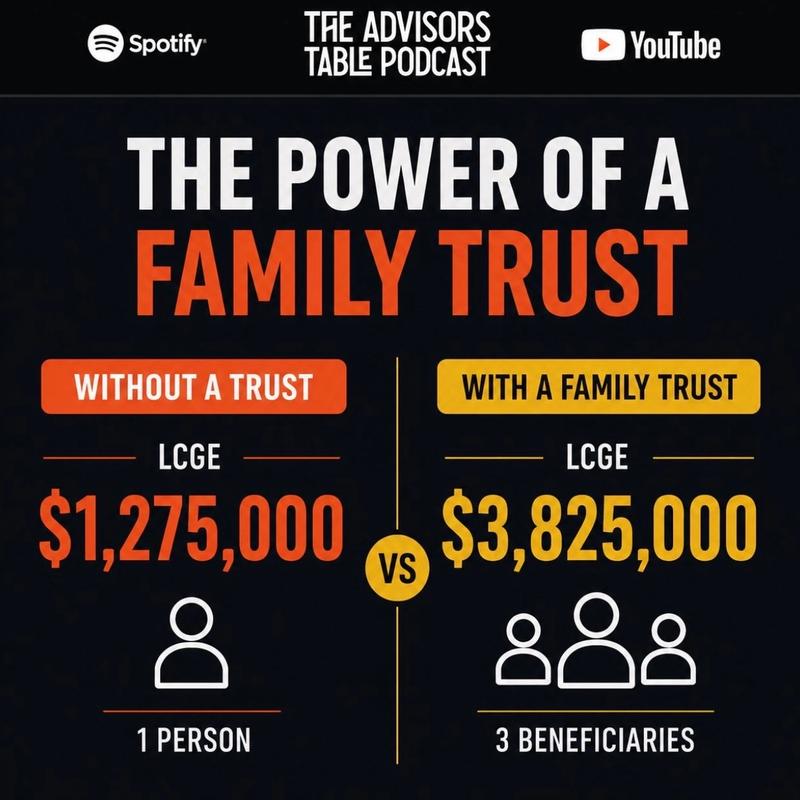
The Power Of A Family Trust
Same business. Same sale. Same CRA rules. The only difference is how the shares were held. Without a trust: $1,275,000 sheltered through LCGE. With a family trust and three kids: up to $3,825,000 sheltered. The math speaks for itself.
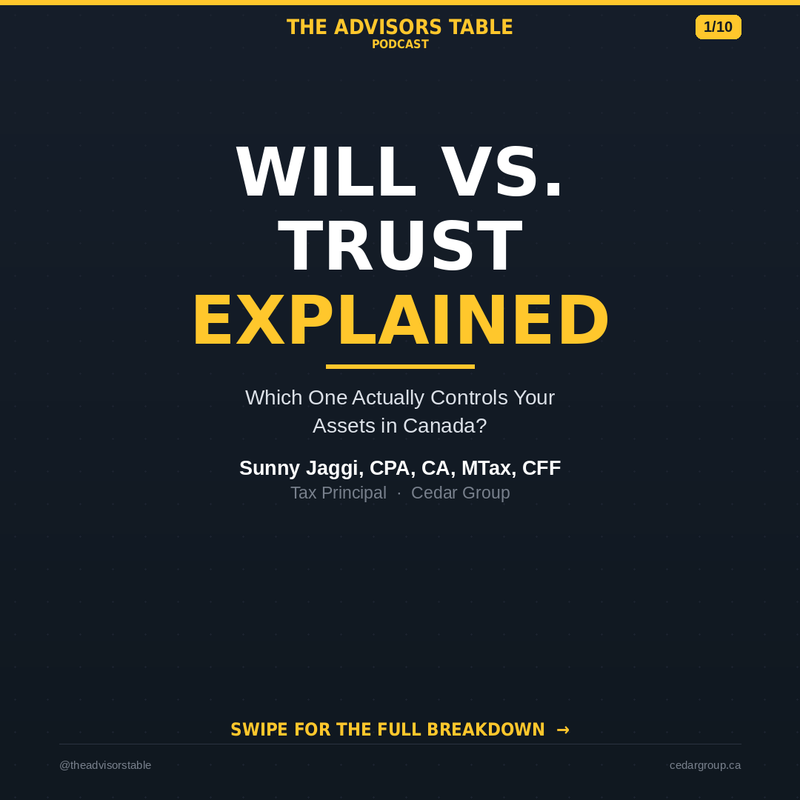
Will Vs. Trust Explained
Most Canadian think their will handles everything. It doesn't. Your RRSP goes to whoever is on the beneficiary form. Your jointly-owned house goes to the surviving owner. Your will? It only controls what's left over. Here's what a will CAN'T do: • Save you tax • Control when your kids get their money • Help if you're incapacitated • Protect assets from creditors A family trust does all of that. And the difference can be hundreds of thousands of dollars.

5 Signs You Actually Need A Holding Company
Not everyone needs a holding company – but for the right person, it can save hundreds of thousands in tax and protect everything you've built. Here are 5 signs it might be time to consider one.
Why The Wealthy Never Gift Their Kids Anything
The wealthiest families in Canada almost never put anything in their kids' names. Not the company. Not the property. Not the investments. It isn't because they don't trust their kids. It's because a gift is the one financial move you can never take back. Swipe for what they do instead, and the $1.3 million difference it made for one family.